

How to choose the right circuit breaker?
Leave a message

Hey there, folks! As a circuit breaker supplier, I get tons of questions from people about how to pick the right circuit breaker. It can be a real head - scratcher, especially if you're not super into electrical stuff. But don't worry, I'm here to break it down for you in plain English.
First off, let's talk about what a circuit breaker actually does. In simple terms, it's like a traffic cop for your electrical system. Its main job is to protect your electrical circuits from overloading or short - circuiting. When there's too much current flowing through a circuit, the breaker trips and cuts off the power, preventing potential fires and damage to your electrical devices.
One of the first things you need to consider when choosing a circuit breaker is the amperage rating. The amperage rating tells you how much current the breaker can handle before it trips. If you have a circuit that regularly draws a lot of power, like a circuit for an air conditioner or an electric stove, you'll need a breaker with a higher amperage rating. On the other hand, for circuits that power things like lights or small appliances, a lower amperage breaker will do the job.

Let's say you're setting up a new electrical circuit in your home. You've got a bunch of LED lights that draw very little power. A 15 - amp breaker would probably be a good choice. But if you're installing an electric water heater, which uses a lot of energy, you'll likely need a 30 - or 40 - amp breaker.
Another important factor is the voltage rating. The voltage rating indicates the maximum voltage that the circuit breaker can safely handle. Most residential electrical systems in the United States operate at 120 or 240 volts, so you'll want to make sure the breaker you choose matches the voltage of your system. Using a breaker with the wrong voltage rating can be extremely dangerous and can lead to electrical failures or even fires.
Next up is the type of circuit breaker. There are several different types out there, each designed for specific applications. For example, molded case circuit breakers are very common. They're used in a wide range of applications, from residential to industrial settings. You can check out our Advanced Molded Case Circuit Breaker for more details on these.
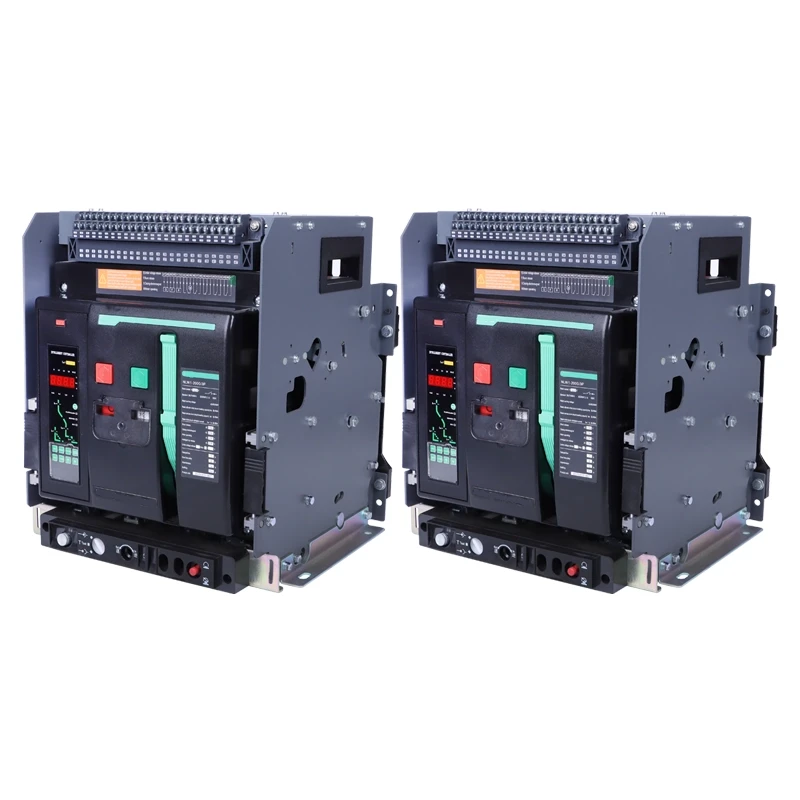
Air circuit breakers are another option. These are often used in high - power applications, such as large industrial plants or commercial buildings. We have two great types to offer: the Fixed Type Air Circuit Breaker and the Intelligent Air Circuit Breaker. The intelligent ones come with advanced features that can monitor and control the electrical system more effectively.
If you're dealing with a three - phase electrical system or need additional protection for neutral conductors, you might want to consider 4 Pole Molded Case Circuit Breakers. These breakers have four poles, which can provide enhanced protection in certain situations.
The interrupting capacity of a circuit breaker is also crucial. The interrupting capacity refers to the maximum amount of current that the breaker can safely interrupt during a short - circuit. You need to make sure that the interrupting capacity of your breaker is high enough for your electrical system. If the breaker's interrupting capacity is too low, it won't be able to handle a short - circuit properly, which can lead to serious damage.
Think about the environment where the circuit breaker will be installed. If it's going to be in a harsh environment, like a factory floor with lots of dust or moisture, you'll need a breaker that's designed to withstand those conditions. Some breakers are made with special enclosures that can protect them from dust, water, and other contaminants.
Cost is always a consideration, too. But you don't want to skimp on quality. A cheap breaker might save you a few bucks upfront, but it could end up costing you a lot more in the long run if it fails to protect your electrical system. When you're looking at the cost, think about the overall value. A more expensive breaker with better features and a higher quality might be worth the investment.
If you're not sure which breaker to choose, it's a good idea to consult with an electrician. Electricians have the knowledge and experience to recommend the right breaker for your specific needs. They can also install the breaker correctly, which is really important for safety.
Now, let's talk about how these circuit breakers fit into the bigger picture of your electrical system. Our LV Power Distribution Panelboards are an important part of that. They serve as the central hub for distributing electrical power throughout a building. Circuit breakers are installed in these panelboards to protect the individual circuits.
When you're planning your electrical system, make sure to consider the layout of your panelboard and how the breakers will be installed. You want to make sure there's enough space for all the breakers you need and that they're arranged in a logical way.
In conclusion, choosing the right circuit breaker involves considering a bunch of factors like amperage, voltage, type, interrupting capacity, environment, and cost. It might seem like a lot, but with a little bit of research and maybe some help from an electrician, you can find the perfect breaker for your needs.
If you're in the market for circuit breakers, we're here to help. We've got a wide range of high - quality circuit breakers and related products to meet your requirements. Whether you're a homeowner doing a small electrical project or a large industrial company, we can provide the right solutions. Don't hesitate to get in touch with us to start a procurement discussion. We're ready to work with you to find the best circuit breakers for your electrical system.
References:
- Electrical Engineering textbooks
- Industry standards for circuit breakers


