Physical Properties Of Grounding Rods
Leave a message
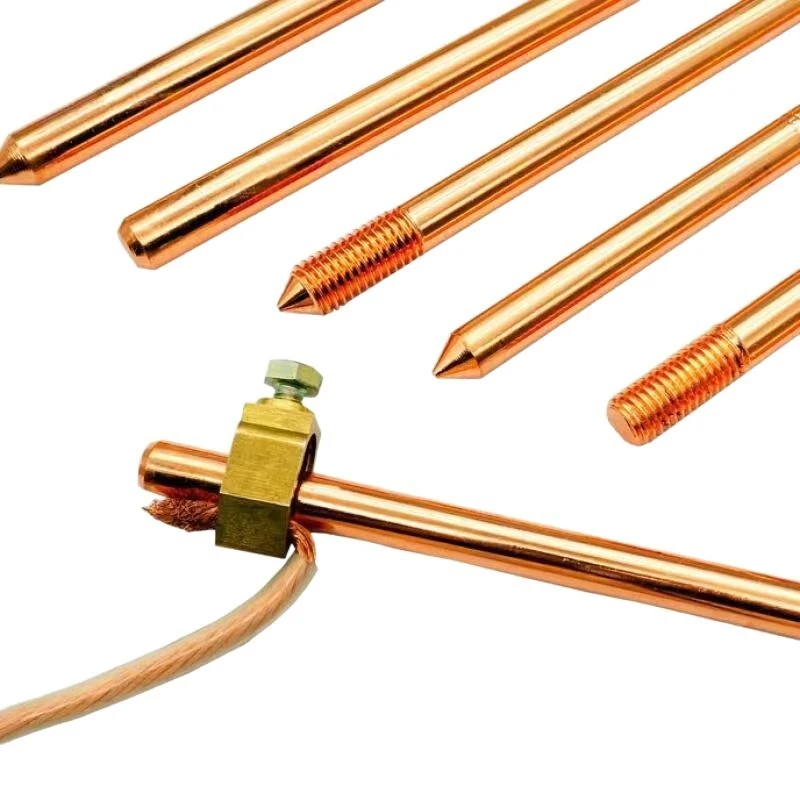
Grounding rods are typically made of highly conductive metallic materials, commonly copper, copper-clad steel, or galvanized steel. Their core physical characteristic is primarily low resistivity, which allows current to be quickly and stably conducted into the earth. The better the conductivity of the material itself, the more stable the grounding effect is generally; therefore, different materials are selected for grounding rods depending on the specific soil environment and requirements.
Grounding rods are generally slender cylinders. This design facilitates insertion into deeper locations underground, thereby increasing the contact area with the soil. A larger contact area reduces grounding resistance and also improves current dissipation capacity. In practical engineering, the length, diameter, and surface treatment of the grounding rod all affect its overall performance. For example, surface coatings not only enhance conductivity but also delay corrosion.
Grounding rods need to be buried for extended periods in moist soil environments with significant acid-base variations; therefore, corrosion resistance is a key performance indicator. Copper-clad steel structures achieve a balance by utilizing the corrosion resistance of the outer copper layer and the mechanical strength of the inner steel layer. Furthermore, grounding rods need to possess sufficient mechanical strength to withstand the impact force when driven into the soil and maintain structural integrity during long-term use.