

How do copper cable lugs compare to other types of cable lugs in terms of performance?
Leave a message

When it comes to electrical connections, cable lugs play a crucial role in ensuring a safe and efficient transfer of electrical current. Among the various types of cable lugs available in the market, copper cable lugs stand out due to their unique performance characteristics. As a copper aluminum cable lug supplier, I have had extensive experience in the industry, and in this blog, I will compare copper cable lugs with other types of cable lugs in terms of performance.
Electrical Conductivity
One of the most important performance factors of cable lugs is electrical conductivity. Copper is renowned for its exceptional electrical conductivity, second only to silver. The high conductivity of copper cable lugs allows for a smooth flow of electrical current, minimizing power loss and heat generation. This is particularly important in high - current applications, where even a small increase in resistance can lead to significant energy losses and potential overheating issues.
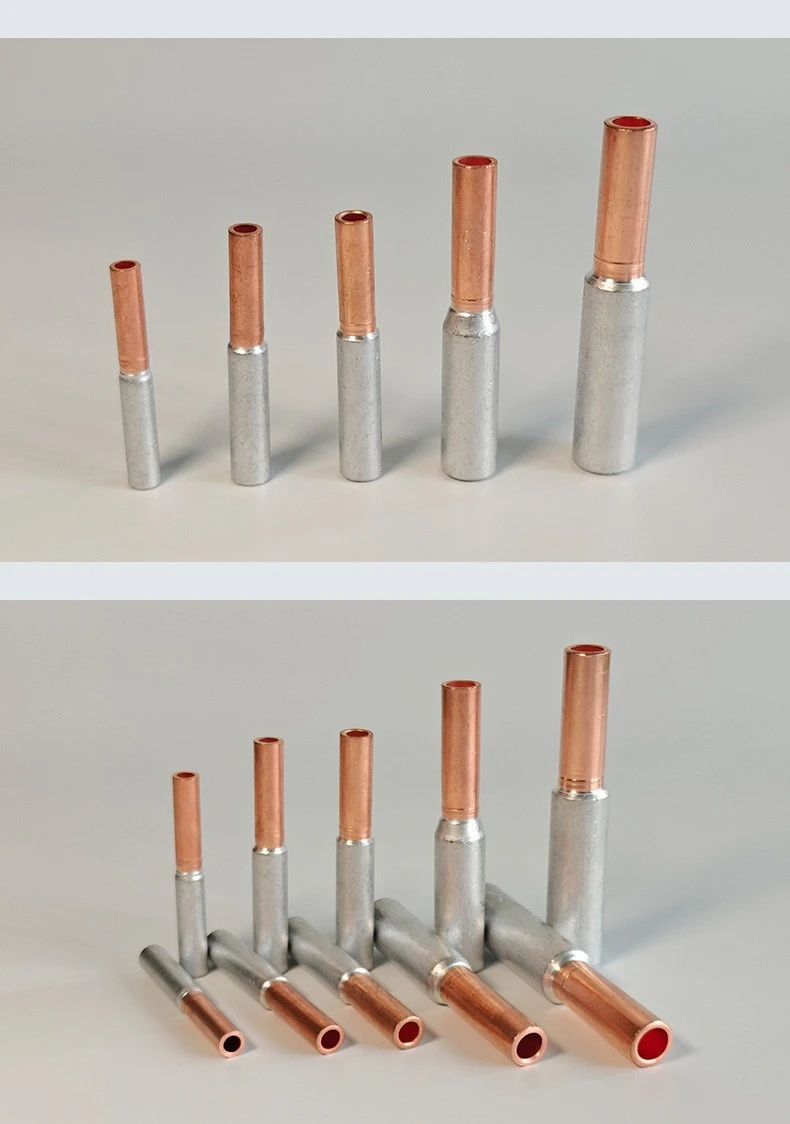
In contrast, some other types of cable lugs, such as those made of aluminum, have lower electrical conductivity compared to copper. Aluminum has approximately 61% of the conductivity of copper. This means that for the same cross - sectional area and current load, an aluminum cable lug will have higher resistance, resulting in more power being dissipated as heat. Over time, the increased heat can cause the lug to expand and contract, which may lead to loose connections and a further increase in resistance. The GTL Copper Aluminium Terminal Lugs combine the advantages of both copper and aluminum. The copper part provides high conductivity at the connection point, while the aluminum part can be used for connection with aluminum cables, which can be a cost - effective solution in some applications.
Corrosion Resistance
Corrosion is another critical factor that affects the performance and lifespan of cable lugs. Copper cable lugs have good corrosion resistance, especially when properly treated or coated. The natural oxide layer that forms on the surface of copper helps to protect it from further oxidation and corrosion. This makes copper cable lugs suitable for a wide range of environments, including those with high humidity or exposure to mild chemicals.
On the other hand, aluminum cable lugs are more prone to corrosion, especially in the presence of moisture and certain chemicals. When aluminum comes into contact with water, it forms aluminum oxide, which is a porous and less protective layer compared to the oxide layer on copper. This can lead to the deterioration of the lug over time, increasing the risk of electrical failures. However, some aluminum cable lugs are treated with special coatings to improve their corrosion resistance. The DTLF Copper Aluminum Cable Lug is designed to address the corrosion issue to some extent by combining copper and aluminum in a way that takes advantage of the relative corrosion - resistant properties of each metal.
Mechanical Strength
The mechanical strength of cable lugs is essential to ensure a secure and long - lasting connection. Copper cable lugs generally have good mechanical strength, which allows them to withstand mechanical stresses such as vibration, tension, and bending without deforming or breaking. This is important in applications where the cables are subjected to movement or external forces.
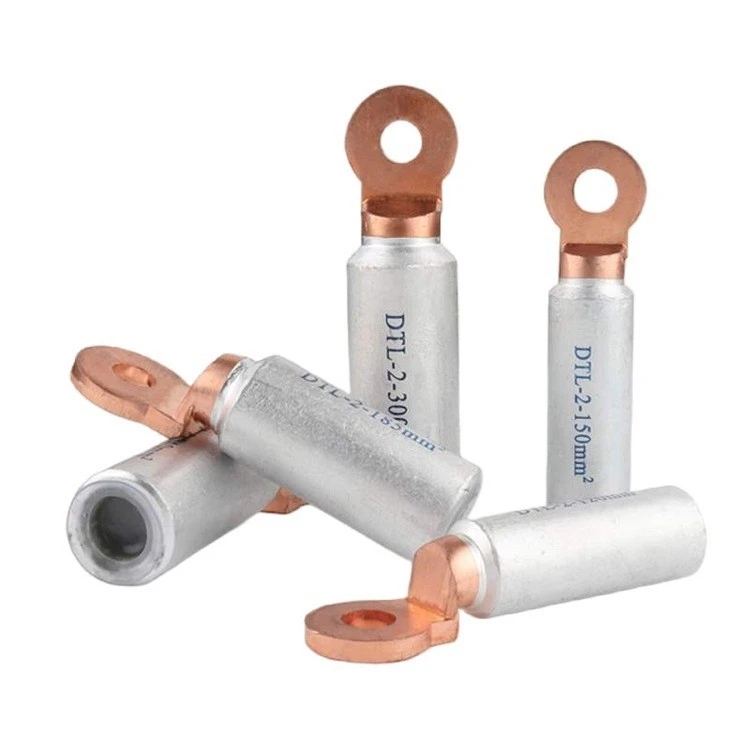
Some types of cable lugs, made from materials like brass or tin - plated steel, may have different mechanical strength characteristics. Brass cable lugs, for example, have relatively good mechanical strength but may not be as conductive as copper. Tin - plated steel cable lugs are often used in applications where cost is a major concern, but their conductivity is significantly lower than that of copper. The DTL2 Copper Lug offers excellent mechanical strength, providing a reliable connection even in demanding environments.
Thermal Performance
The ability of cable lugs to handle heat is closely related to their electrical and mechanical performance. Copper cable lugs have good thermal conductivity, which means they can dissipate heat more effectively than many other types of cable lugs. In high - current applications, where a significant amount of heat is generated, the ability to transfer heat away from the connection point is crucial to prevent overheating and potential damage to the cables and equipment.
In contrast, cable lugs made from materials with lower thermal conductivity may experience higher temperatures during operation. This can not only reduce the lifespan of the lug but also pose a safety hazard. For example, if the temperature of a cable lug exceeds its rated limit, it can cause the insulation of the cable to melt, leading to short circuits or even fires.
Cost Considerations
While copper cable lugs offer superior performance in many aspects, cost is also an important factor to consider. Copper is a relatively expensive metal compared to aluminum. As a result, copper cable lugs are generally more costly than aluminum cable lugs. However, the higher cost of copper cable lugs can be justified in applications where high performance, reliability, and long - term durability are required.
In some cases, a combination of copper and aluminum cable lugs, such as the ones we supply, can provide a balance between cost and performance. For less critical applications or where cost is a major constraint, aluminum cable lugs may be a more suitable choice. But it's important to note that the long - term cost of using lower - performance cable lugs, including potential maintenance and replacement costs, should be taken into account.
Conclusion
In conclusion, copper cable lugs offer significant advantages over other types of cable lugs in terms of electrical conductivity, corrosion resistance, mechanical strength, and thermal performance. However, cost is an important consideration, and in some cases, a combination of copper and aluminum cable lugs can provide a cost - effective solution.
As a copper aluminum cable lug supplier, we understand the importance of providing high - quality cable lugs that meet the diverse needs of our customers. Our GTL Copper Aluminium Terminal Lugs, DTL2 Copper Lug, and DTLF Copper Aluminum Cable Lug are designed to offer the best of both worlds, combining the performance of copper with the cost - effectiveness of aluminum in some cases.
If you are in the market for cable lugs and want to discuss your specific requirements, we invite you to contact us for a detailed consultation and to explore our range of products. We are committed to providing you with the best solutions for your electrical connection needs.
References
- "Electrical Conductors Handbook", McGraw - Hill
- "Corrosion of Metals in Electrical Systems", ASTM International
- "Mechanical Properties of Engineering Materials", Wiley


