

What is the effect of temperature on the expansion of a copper cable lug?
Leave a message

Hey there! As a supplier of copper cable lugs, I've seen firsthand how important it is to understand the various factors that can affect these little but crucial components. One such factor that often gets overlooked is the effect of temperature on the expansion of a copper cable lug. In this blog post, I'm gonna break down what happens to copper cable lugs when the temperature changes and why it matters to you.
First off, let's talk a bit about copper itself. Copper is a great material for cable lugs because it's an excellent conductor of electricity. It's also relatively malleable, which means it can be easily shaped into the right form for connecting cables. But like all metals, copper expands when it gets hot and contracts when it cools down. This property is known as thermal expansion, and it can have a significant impact on the performance of copper cable lugs.
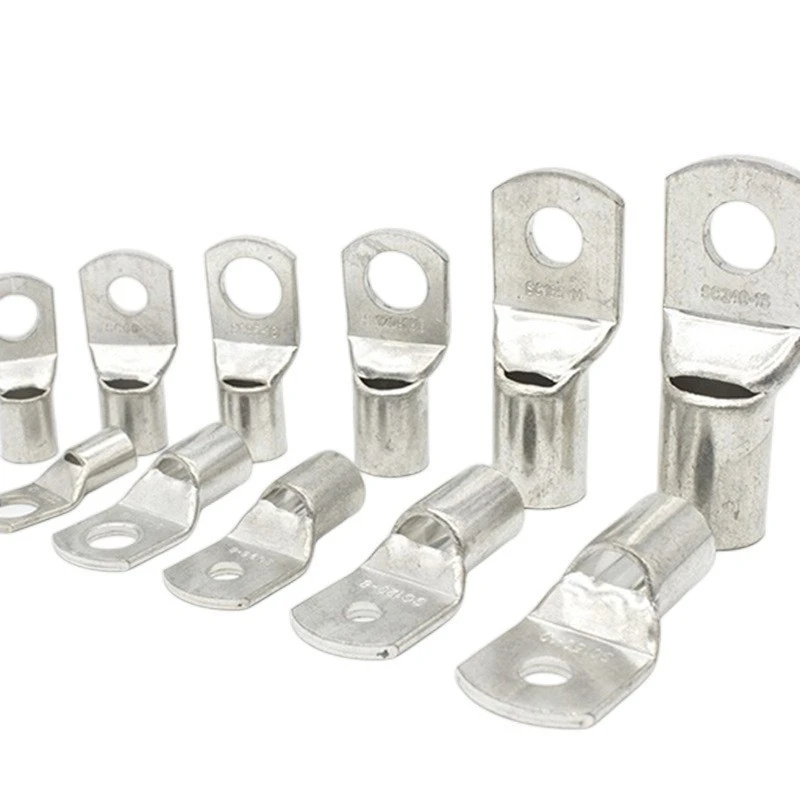

When a copper cable lug is exposed to high temperatures, it starts to expand. This expansion can be both linear (in one direction) and volumetric (in all directions). The amount of expansion depends on a few things, like the initial temperature, the final temperature, and the length or volume of the cable lug. The coefficient of thermal expansion (CTE) is a measure of how much a material will expand or contract per degree of temperature change. For copper, the CTE is about 16.5 x 10^-6 per degree Celsius. That might seem like a tiny number, but over a large temperature range or with a big cable lug, it can add up.
Let's say you've installed a copper cable lug in an electrical system where the temperature can vary quite a bit. During the day, when the sun is shining and the equipment is running, the temperature might rise to 60 degrees Celsius or more. At night, it could drop down to 20 degrees Celsius or lower. This kind of temperature swing can cause the copper cable lug to expand and contract repeatedly.
So, what's the big deal with this expansion and contraction? Well, it can lead to a few problems. One of the most common issues is loosening of the connection. When the cable lug expands, it might push against the cable or the terminal it's connected to. Then, when it contracts, there's a risk that the connection will become loose. A loose connection can cause a whole host of problems, like increased electrical resistance, which can lead to overheating, power loss, and even electrical fires in extreme cases.
Another problem is mechanical stress. The repeated expansion and contraction can put a lot of stress on the cable lug itself and the surrounding components. Over time, this stress can cause cracks or fractures in the cable lug, weakening its structure and reducing its lifespan. It can also damage the cable insulation, leading to short circuits or other electrical issues.
On the flip side, if the temperature drops too low, the contraction of the copper cable lug can cause it to become too tight. This can damage the cable or the terminal, especially if they're made of a different material with a different CTE. For example, if the cable is made of aluminum and the lug is made of copper, the difference in thermal expansion can create a lot of tension at the connection point.
Now, as a supplier, I understand that these are real concerns for you. That's why we offer high - quality Sc Copper Cable Lugs and SC Copper Terminal Lugs. Our lugs are designed to withstand a wide range of temperatures without losing their integrity. We use high - grade copper that has been carefully processed to ensure consistent CTE and mechanical properties.
To minimize the effects of temperature on our copper cable lugs, we also recommend some best practices. When installing the cable lugs, make sure to use the right torque. Over - tightening or under - tightening can make the problem worse. You should also use a good quality anti - oxidation compound to protect the connection from corrosion, which can be exacerbated by temperature changes.
If you're using cable lugs in an environment with extreme temperatures, you might want to consider using temperature - compensating devices. These can help to maintain a stable connection even as the temperature fluctuates. Some of our customers have also found it helpful to install a thermal insulation layer around the cable lugs to reduce the impact of external temperature changes.
So, if you're in the market for reliable copper cable lugs, look no further. We've got the expertise and the products to meet your needs. Whether you're working on a small DIY electrical project or a large industrial installation, our copper cable lugs will stand up to the test of temperature and time.
If you're interested in learning more about our products or have any questions about how temperature affects copper cable lugs, feel free to reach out. We're always happy to chat and help you find the right solution for your electrical needs. Contact us today to start a discussion about your purchase and let's see how we can work together to ensure your electrical systems run smoothly.
References
- Incropera, F. P., & DeWitt, D. P. (2002). Fundamentals of Heat and Mass Transfer. John Wiley & Sons.
- Mark's Standard Handbook for Mechanical Engineers. (2007). McGraw - Hill.


