

How do circuit breakers comply with safety standards?
Leave a message

Circuit breakers play a crucial role in electrical systems, safeguarding equipment and individuals from the hazards of overcurrent and short circuits. As a circuit breakers supplier, we understand the paramount importance of ensuring that our products comply with safety standards. In this blog post, we'll delve into how circuit breakers achieve this compliance and why it matters.
Understanding Safety Standards for Circuit Breakers
Safety standards for circuit breakers are established by various national and international organizations. For example, the International Electrotechnical Commission (IEC) and the Underwriters Laboratories (UL) are prominent bodies that set comprehensive guidelines. These standards cover a wide range of aspects, from the design and construction of circuit breakers to their performance under different operating conditions.
The design of a circuit breaker must adhere to strict mechanical and electrical specifications. For instance, the materials used in the construction of contacts should have high conductivity to minimize heat generation during normal operation. The enclosure must be sturdy enough to protect the internal components from physical damage and environmental factors such as dust and moisture.
Compliance Through Design and Construction
To comply with safety standards, circuit breakers are designed with multiple protective features. One of the most fundamental is the overcurrent protection mechanism. When the current flowing through the circuit breaker exceeds a pre - determined value, the breaker trips and interrupts the electrical flow. This can be achieved through thermal or magnetic elements, or a combination of both.
Thermal elements are based on the principle that the temperature of a conductor increases with the increase in current. In a thermal - magnetic circuit breaker, a bimetallic strip is used. When the current is too high for an extended period, the heat causes the bimetallic strip to bend, which in turn triggers the trip mechanism.
Magnetic elements, on the other hand, respond to short - circuit currents. These currents are typically much larger and of shorter duration compared to overcurrents. A magnetic coil in the circuit breaker generates a magnetic field proportional to the current. When the current reaches a very high level, the magnetic field is strong enough to actuate a solenoid, which trips the breaker.
In addition to overcurrent protection, circuit breakers are also designed to protect against short - circuit currents. These are extremely high currents that can occur when there is a direct connection between two conductors of different potentials, such as a live wire and a neutral wire. The design of the breaker must be able to handle the high stress and energy associated with short - circuit events without failing.
Testing and Certification
Once a circuit breaker is designed and manufactured, it undergoes rigorous testing to ensure compliance with safety standards. These tests are carried out in specialized laboratories under controlled conditions.
One of the key tests is the short - circuit withstand test. In this test, the circuit breaker is subjected to a short - circuit current for a specified period. The breaker must be able to interrupt the current within a given time frame and withstand the mechanical and thermal stress without significant damage.
Another important test is the temperature rise test. This test measures the increase in temperature of the circuit breaker under normal operating conditions. The temperature rise should not exceed the limits specified by the safety standards, as excessive heat can damage the internal components and reduce the lifespan of the breaker.
After passing all the required tests, the circuit breaker can obtain a certification from a recognized testing organization. This certification serves as proof that the breaker meets the relevant safety standards and can be safely used in electrical systems.
Compliance in Different Types of Circuit Breakers
There are various types of circuit breakers available in the market, each with its own unique characteristics and applications. Let's take a look at how some common types comply with safety standards.
-
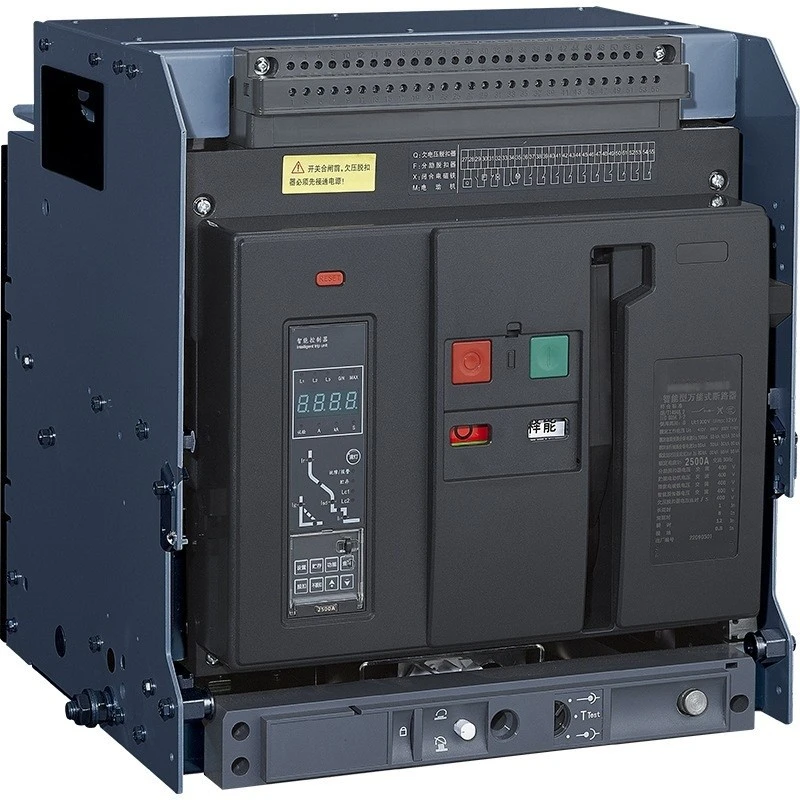
Intelligent Air Circuit Breaker: These breakers are equipped with advanced technology that allows for more precise control and monitoring. They can communicate with other devices in the electrical system and provide real - time information about the current, voltage, and other parameters. To comply with safety standards, intelligent air circuit breakers are designed with redundant protection mechanisms. In addition to the traditional overcurrent and short - circuit protection, they may also have features such as ground fault protection and arc flash protection.
-
Drawer Type Air Circuit Breakers: Drawer type air circuit breakers are designed for easy installation and maintenance. They have a modular design that allows for quick replacement of the breaker unit. From a safety perspective, these breakers must be designed to ensure proper electrical isolation when the drawer is removed or inserted. The connection and disconnection mechanisms must be designed to prevent accidental contact with live parts, and the enclosure must provide adequate protection against electric shock.
-
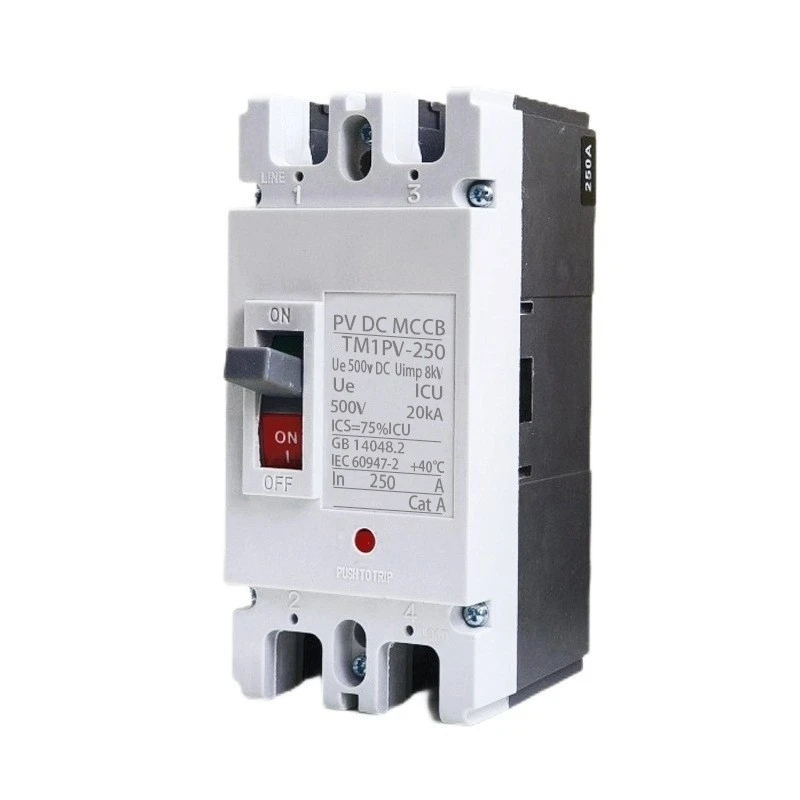
4 Pole Molded Case Circuit Breakers: These breakers are commonly used in three - phase electrical systems. The addition of a fourth pole can provide protection for the neutral conductor. To comply with safety standards, 4 pole molded case circuit breakers must be able to accurately sense and interrupt faults in all four poles. The internal insulation and contact systems must be designed to handle the electrical stresses associated with three - phase operation.
-
Frame Circuit Breaker: Frame circuit breakers are used in high - current applications. They are designed to handle large amounts of electrical power and are often used in industrial settings. Complying with safety standards requires that frame circuit breakers have robust mechanical and electrical components. The contacts must be able to withstand high current densities without excessive wear, and the trip mechanisms must be reliable even under extreme operating conditions.
-
Low Voltage Pole Mounted Circuit Breakers: These breakers are installed on utility poles and are used to protect low - voltage distribution networks. They are exposed to harsh environmental conditions, such as wind, rain, and temperature variations. To comply with safety standards, low voltage pole mounted circuit breakers must be weather - resistant and have a high degree of mechanical integrity. The enclosure must be sealed to prevent the ingress of moisture and dust, and the operating mechanisms must be designed to function properly in all weather conditions.
Why Compliance Matters
Compliance with safety standards is not just a legal requirement; it is also essential for the well - being of users and the reliability of electrical systems. Non - compliant circuit breakers may fail to protect against overcurrents and short circuits, which can lead to electrical fires, equipment damage, and even personal injuries.
Customers can have confidence in products that are certified to meet safety standards. When purchasing circuit breakers, they know that these products have been tested and verified to function properly under a wide range of conditions. This reduces the risk of downtime in electrical systems and helps to prevent costly equipment failures.
Contact Us for Your Circuit Breaker Needs
As a leading circuit breakers supplier, we are committed to providing high - quality products that comply with the latest safety standards. Our range of circuit breakers includes intelligent air circuit breakers, drawer type air circuit breakers, 4 pole molded case circuit breakers, frame circuit breakers, and low voltage pole mounted circuit breakers, all designed to meet the diverse needs of our customers.
If you are in the market for circuit breakers and would like to discuss your specific requirements, we invite you to contact us for a procurement discussion. Our experienced team is ready to assist you in selecting the right circuit breakers for your electrical system.
References
- International Electrotechnical Commission (IEC) Standards on Circuit Breakers
- Underwriters Laboratories (UL) Standards for Circuit Breakers
- Electrical Safety Codes and Regulations


