

Can circuit breakers be damaged by lightning?
Leave a message

As a supplier specializing in circuit breakers, the question of whether circuit breakers can be damaged by lightning is one that I encounter quite frequently. In this blog, I'll delve into the science behind lightning strikes, how they interact with electrical systems, and the potential impact on circuit breakers.
Understanding Lightning and Its Electrical Characteristics
Lightning is a sudden electrostatic discharge that occurs during a thunderstorm. It is an incredibly powerful natural phenomenon, capable of generating extremely high voltages and currents. A typical lightning strike can produce a voltage of up to hundreds of millions of volts and a current that can reach tens of thousands of amperes. This massive amount of energy is released in a very short period, usually within a fraction of a second.
When lightning strikes, it can follow different paths. It may strike directly on a power line, a building, or the ground near an electrical installation. In the case of a direct strike on a power line, the excessive energy from the lightning can be transferred along the line and into the electrical system connected to it. Even an indirect strike, where lightning hits the ground nearby, can induce a large surge of electricity in the nearby power lines due to electromagnetic induction.
How Circuit Breakers Work
Circuit breakers are essential components in electrical systems. Their primary function is to protect the electrical system from damage caused by overcurrents, such as short - circuits or overloads. When the current flowing through a circuit exceeds a pre - set value, the circuit breaker trips, interrupting the flow of electricity. This is achieved through various mechanisms, such as thermal, magnetic, or a combination of both.
Thermal circuit breakers operate based on the principle that an increase in current causes a wire inside the breaker to heat up. As the wire heats, it expands and eventually triggers a switching mechanism to open the circuit. Magnetic circuit breakers, on the other hand, respond to the magnetic field generated by the current. When the current reaches a high enough level, the magnetic force overcomes a mechanical restraint, causing the breaker to trip.
The Impact of Lightning on Circuit Breakers
The high - energy surge from a lightning strike can pose a significant threat to circuit breakers. Firstly, the extremely high voltage can cause insulation breakdown within the circuit breaker. Circuit breakers are designed to operate within a certain voltage range, and a lightning - induced voltage surge can far exceed this range. When the insulation breaks down, it can lead to arcing inside the breaker, which can cause damage to the internal components such as contacts, coils, and the housing.
Secondly, the large current associated with a lightning strike can also cause problems. If the current is high enough, it can cause the contacts within the circuit breaker to weld together. This is known as contact welding, and it prevent the breaker from being able to trip even if there is a subsequent overcurrent condition. Additionally, the high - current surge can cause mechanical stress on the internal components of the breaker. The rapid change in current can generate strong magnetic forces that can deform or break parts of the breaker's mechanism.
Types of Circuit Breakers and Their Vulnerability
Different types of circuit breakers have varying levels of vulnerability to lightning strikes.
Low Voltage Molded Case Circuit Breaker
Low Voltage Molded Case Circuit Breaker are commonly used in residential and commercial electrical systems. They are typically designed to handle relatively low - to - medium current levels. While they have some built - in protection against overcurrents, they may not be able to withstand the extreme energy of a lightning strike without damage. The insulation and internal components of these breakers can be easily damaged by the high voltage and current surges.
Drawer Type Air Circuit Breakers
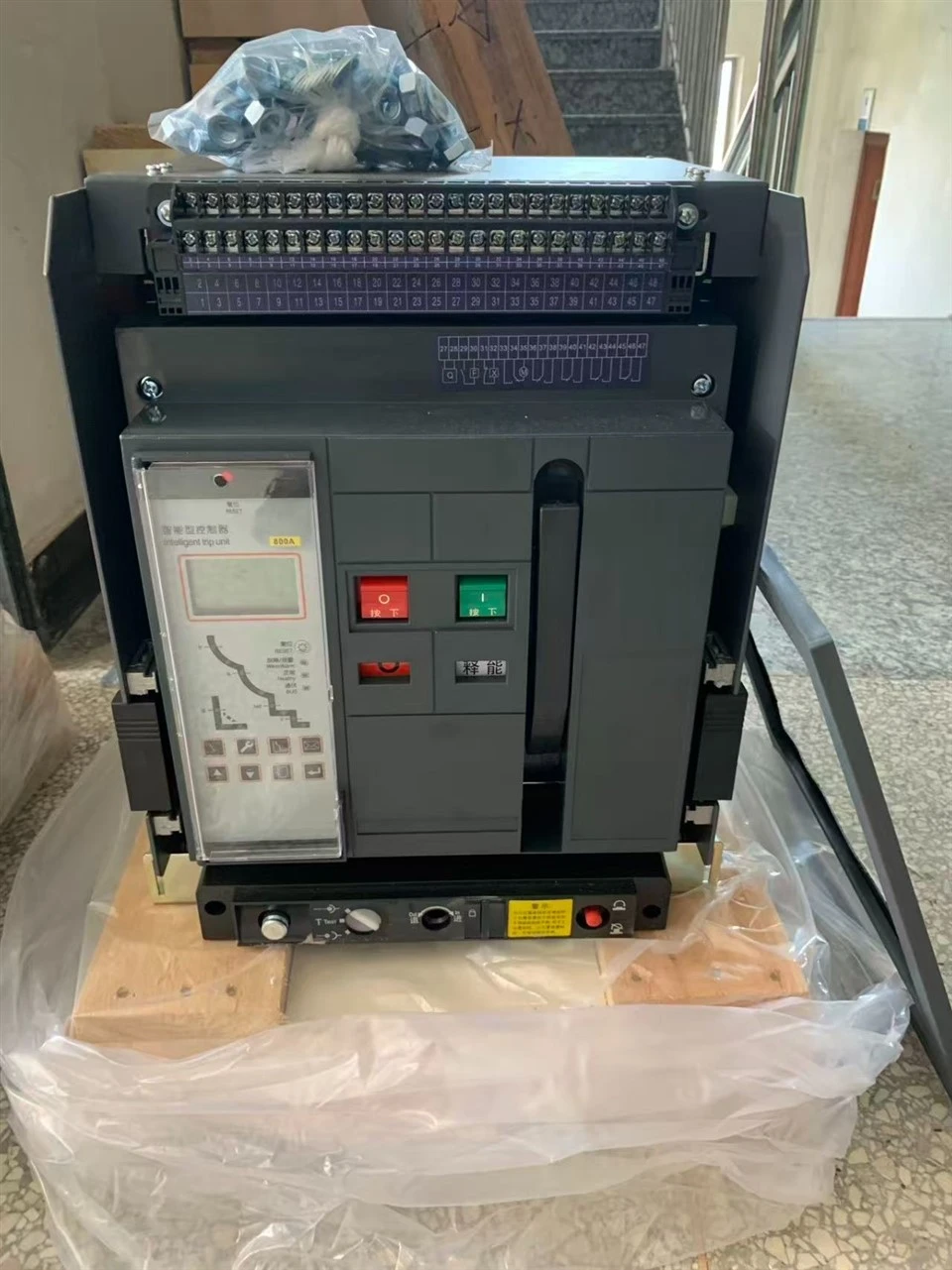
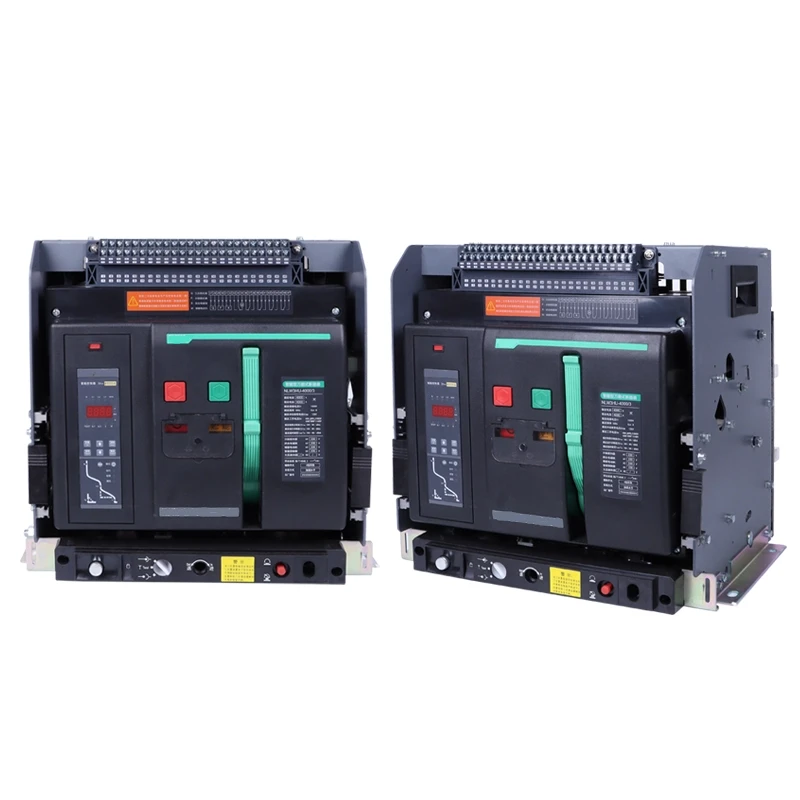
Drawer Type Air Circuit Breakers are often used in industrial applications where higher current and voltage levels are involved. They are generally more robust than low - voltage molded case circuit breakers. However, a direct or a very large indirect lightning strike can still pose a risk. The air insulation in these breakers can be compromised by the high - voltage surge, and the mechanical parts can be damaged by the high - current forces.
LV Distribution Panelboard
LV Distribution Panelboard are an important part of electrical distribution systems. They contain multiple circuit breakers, and a lightning strike on the panelboard or the associated power lines can affect all the breakers within it. The close proximity of the breakers in the panelboard can lead to cross - talk between the circuits during a surge, increasing the likelihood of damage.
Intelligent Air Circuit Breaker
Intelligent Air Circuit Breaker are equipped with advanced monitoring and protection features. While these features can enhance the overall performance and safety of the electrical system, they also introduce additional components that can be sensitive to lightning - induced surges. The electronic control circuits in intelligent breakers can be easily damaged by the high - voltage spikes, leading to malfunction or complete failure.
Frame Circuit Breaker
Frame Circuit Breaker are large - scale circuit breakers used in high - power applications. They are designed to handle very high currents and voltages. However, even these heavy - duty breakers are not immune to lightning damage. The large size and complex internal structure of frame circuit breakers mean that a lightning strike can cause widespread damage, affecting multiple components and potentially leading to a complete breakdown of the breaker.
Protecting Circuit Breakers from Lightning Damage
To protect circuit breakers from lightning damage, several measures can be taken. One of the most common methods is the use of surge protectors. Surge protectors are devices that divert the excess voltage from a lightning strike to the ground, preventing it from reaching the circuit breakers and other electrical equipment. They are typically installed at the entrance of the electrical system, such as at the main service panel.
Another approach is to use proper grounding. A good grounding system provides a low - resistance path for the lightning current to flow into the ground. This helps to reduce the voltage and current levels within the electrical system, minimizing the risk of damage to the circuit breakers. Additionally, shielding the electrical cables and equipment can also help to reduce the impact of electromagnetic interference from lightning strikes.
Conclusion
In conclusion, circuit breakers can indeed be damaged by lightning. The high voltage and current associated with lightning strikes can cause insulation breakdown, contact welding, and mechanical damage to the breakers. Different types of circuit breakers, including Low Voltage Molded Case Circuit Breaker, Drawer Type Air Circuit Breakers, LV Distribution Panelboard, Intelligent Air Circuit Breaker, and Frame Circuit Breaker, all have varying degrees of vulnerability.
However, with proper protection measures such as surge protectors, grounding, and shielding, the risk of damage can be significantly reduced. If you are looking for high - quality circuit breakers that are designed to withstand various electrical challenges, including lightning strikes, we are here to help. Our team of experts can provide you with the right solutions for your specific needs. Whether you are involved in residential, commercial, or industrial projects, we have the products and knowledge to support you. Contact us for more information and to start a procurement discussion.
References
- "Electrical Power Systems: Design and Analysis" by Turan Gonen.
- "Lightning Protection for Structures" published by the Institute of Electrical and Electronics Engineers (IEEE).
- Technical documents from major circuit breaker manufacturers.


